When comparing brush chipper models, one of the most important considerations are the safety features. Of course, there are other machine specs to evaluate, such as size and performance, but we believe that operator and crew safety should be a top priority when looking to purchase a brush chipper.
There are key differences in safety features that come standard and those that are optional with an associated cost when looking at competitor offerings. All Vermeer brush chippers are equipped with a standard safety feature: the bottom feed stop bar, among others.
What is a bottom feed stop bar?
This feature was designed with safety in mind while feeding material on the jobsite. The bottom feed stop bar is strategically located at the front of the feed table to make it possible to shut off the feed mechanism. It is important to note that when the bottom feed stop bar is triggered, it will stop only the feed roller on the chipper, not the drum.
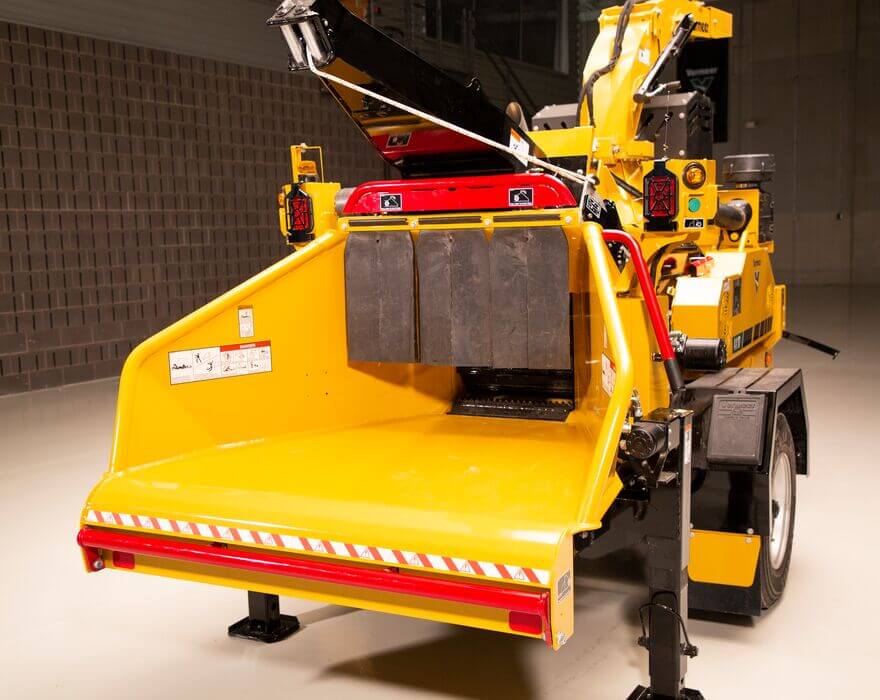
Adjustable sensitivity settings
If material is tripping the stop bar, operators have the ability to adjust and reduce the sensitivity settings. This was implemented on all Vermeer brush chippers so if the sensitivity settings are reduced, the stop bar will require more pressure to stop the rollers. The adaptability of this feature minimizes the machine stopping on the jobsite due to material striking the bar unintentionally.
The normal sensitivity setting on the bottom feed stop bar is 22 degrees with an actuation force of 34 lb (15.4 kg), while the reduced sensitivity is 12 degrees. A green reset or hold-to-run button on each side of the infeed housing allows the operator to readily reset the system.
Competitor offerings
No competitor brush chipper models offer an electronically-controlled bottom feed stop bar as a standard feature. Competitor brush chipper models that do offer the bottom stop bar feature an as option will have an associated price increase. Most competitor models are equipped with last chance cables. These cables are located within the infeed tables and when pulled will reverse direction or stop the feed rollers. Similar to the bottom feed stop bar, pulling the last chance cables will only stop the feed rollers but not the drum.
The bottom feed stop bar on Vermeer brush chippers was designed to keep safety a top priority while working on a jobsite. For more information on Vermeer brush chippers, contact your local dealer.
Vermeer Corporation reserves the right to make changes in product engineering, design and specifications; add improvements; or discontinue manufacturing or distribution at any time without notice or obligation. Equipment shown is for illustrative purposes only and may display optional accessories or components specific to their global region. Please contact your local Vermeer dealer for more information on machine specifications.
Vermeer and the Vermeer logo are trademarks of Vermeer Manufacturing Company in the U.S. and/or other countries. © 2022 Vermeer Corporation. All Rights Reserved.