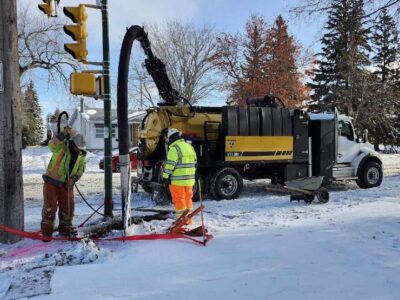
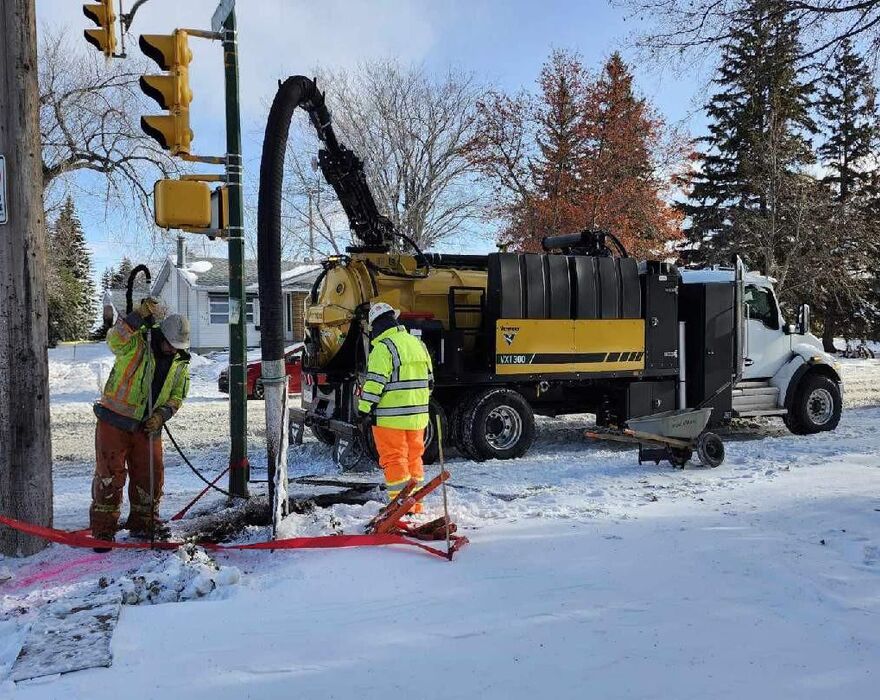
As temperatures drop, taking time to prepare your Vermeer vacuum excavator for cold weather can help prevent costly downtime. While the process may differ slightly between models, the fundamentals remain the same. Following the steps outlined in the product manual and applying a few best practices can help protect tanks, pumps, valves and water lines through freezing conditions.
TJ Steele, product manager for Vermeer vacuum excavators, said winterization should be part of every contractor’s cold-weather plan. The goal, he explained, is to keep moisture from freezing anywhere in the system because even a small amount of trapped water can expand and damage fittings, valves or pumps. Before starting the process, review the cold-weather section of your operator’s manual for model-specific procedures.
Drain and purge the water system
The goal of winterization isn’t just to add antifreeze, it’s to get water out. Any moisture left in the plumbing can freeze and block lines before antifreeze ever reaches those areas. Draining and purging first helps make sure the antifreeze can move through the entire system the way it’s supposed to.
“Before introducing antifreeze, start with a thorough drain and purge to remove water that could freeze in tanks, lines or fittings,” Steele explained.
Steps to drain and purge:
- Park on level ground or a slight decline to help tanks empty.
- Open the main drain valves on both the water and spoil tanks.
- Check corner drains or low points where water might collect.
- Open the pump and filter drains after closing the main water supply.
- If equipped with an onboard air system, use it to push out residual water from hoses and plumbing. Keep air flowing for about 30 seconds after air appears at the hose outlet.
- Inspect the filter bowl and drain any remaining water before reinstalling the cap.
Run antifreeze through the system
Once drained, use the onboard air system to blow remaining water from the lines, then add antifreeze to protect internal components. The antifreeze coats parts like the pump, jets and return lines to prevent ice from forming and stays in the system until you are ready to return to service.
“Start by using air to blow water from the lines,” Steele said. “Then introduce antifreeze to the water system. The solution needs to reach every fitting and valve seat so it doesn’t freeze overnight.”
To add antifreeze to the system:
- Switch the suction line to the antifreeze tank or container.
- Start the water pump and run it until antifreeze appears at the hose outlet—this confirms it has reached all major components.
- If the excavator has a water-level sensor, use the manual bypass briefly so the pump continues to circulate.
- Once antifreeze flows steadily, connect the hose to the recirculation line and let it run for about 30 seconds.
- Shut off the valves and pump.
- Leave antifreeze in the system until ready to return to service. On the Vermeer VXT300 and VXT600 vacuum trucks, you can use the onboard air system to recapture the antifreeze in the antifreeze tank for reuse.
A 50/50 mix works well for most applications, though stronger concentration may be needed in extreme cold. The VXT600G2 features an auto antifreeze button that eliminates the guesswork of which valves need to be turned. Watch this video-walkthrough for a full demonstration.
Operating through cold weather
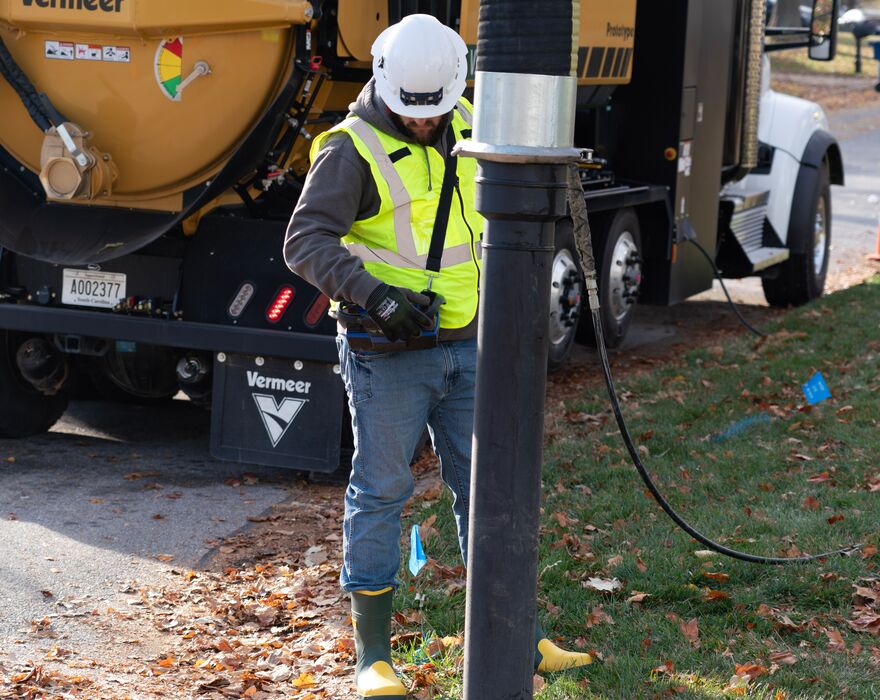
If you plan to continue operating in freezing temperatures, drain water at the end of each day and replace it with antifreeze overnight.
Consistency matters more than complexity, Steele said. Draining and adding antifreeze at the end of every shift keeps the system ready to run the next morning without surprises.
End-of-day checklist:
- Drain water and spoil tanks completely, even if the machine is stored indoors.
- Open valves and use onboard air to blow moisture from plumbing.
- Run antifreeze through the system before parking.
- Recapture antifreeze the next morning before refilling with water. (Note: Only recapture antifreeze a few times, as it can become diluted from residual water.)
- Verify all drain valves are closed before operation.
- On models with digital display screens, review system alerts and verify the water system is empty before parking overnight.
Storing your vacuum excavator
If you plan to store equipment through the winter, complete the antifreeze procedure, then follow these long-term steps:
Drain both the water and spoil tanks completely.
- Leave drain valves open to allow airflow and moisture release.
- Disconnect hoses and cover open ports to keep debris and rodents out.
- Park on level ground, indoors if possible.
- If stored outdoors, clear snow and ice from around tanks and valves.
- Start the engine periodically and let it reach operating temperature to circulate fluids and maintain seals.
- When it’s time to get back to work, flush the water system, check fittings and test the pump before resuming normal operation.
Cold-weather kit option
For crews who regularly work through harsh conditions, Vermeer offers a cold-weather kit on select models. These include heated cabinets, insulated and heated water lines and valve insulations to help maintain above-freezing temperatures in critical areas.
Some newer units include integrated cabinet and waterline heaters that should be tested before the first hard freeze, as outlined in the operator’s manual. When parked overnight in sub-freezing temperatures, leave the system powered so those heaters can maintain warmth around valves and fittings.
“The kit isn’t a replacement for good maintenance,” Steele said. “But it helps crews stay productive when temperatures remain below freezing for days at a time.”
Plan ahead for a productive season
Following these winterization steps (draining, purging, running antifreeze and performing daily blowouts) helps protect your investment and keep crews productive. “Taking time now saves headaches later,” Steele said. And, your dealer can walk you through model-specific procedures and cold-weather options for your region.”
For additional information, contact your local Vermeer dealer.
Vermeer MV Solutions, Inc. reserves the right to make changes in engineering, design and specifications; add improvements; or discontinue manufacturing at any time without notice or obligation. Equipment shown is for illustrative purposes only and may display optional accessories or components specific to their global region. Please contact your local Vermeer dealer for more information on machine specifications. Vermeer, the Vermeer logo and QuickDig are trademarks of Vermeer Manufacturing Company in the U.S. and/or other countries. © 2025 Vermeer MV Solutions, Inc. All Rights Reserved.