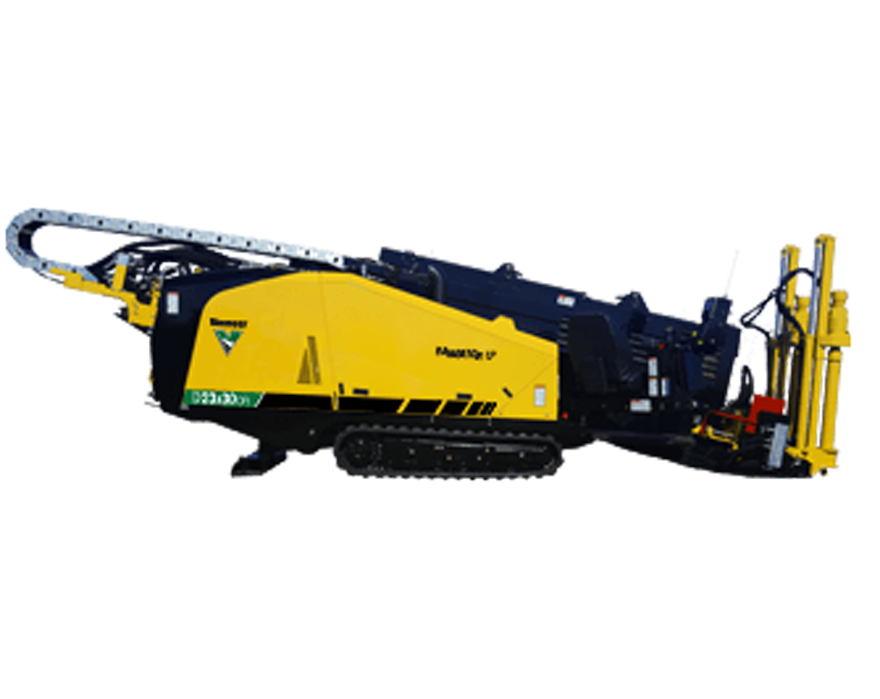
Not every rock bore needs a big hole. Telecom work in particular often means placing a single, small conduit. Drilling a 5.5-in (14 cm) or larger pilot bore to install it can add water, time and cost to a project. That feedback from contractors, along with demand from European crews working under strict manual handling rules, is why Vermeer developed the RH9 rock head, an undersized addition to the dual rod (DR) rock head family for Vermeer horizontal directional drills.
“We started down this path because of what contractors were telling us. Domestically, it was telecom work, single small pipe, where the job does not call for a giant hole. In Europe it was crews that needed a head they could get on the drill without support equipment,” said Cody Mecham, product manager at Vermeer.
Scaling down the dual rod rock head
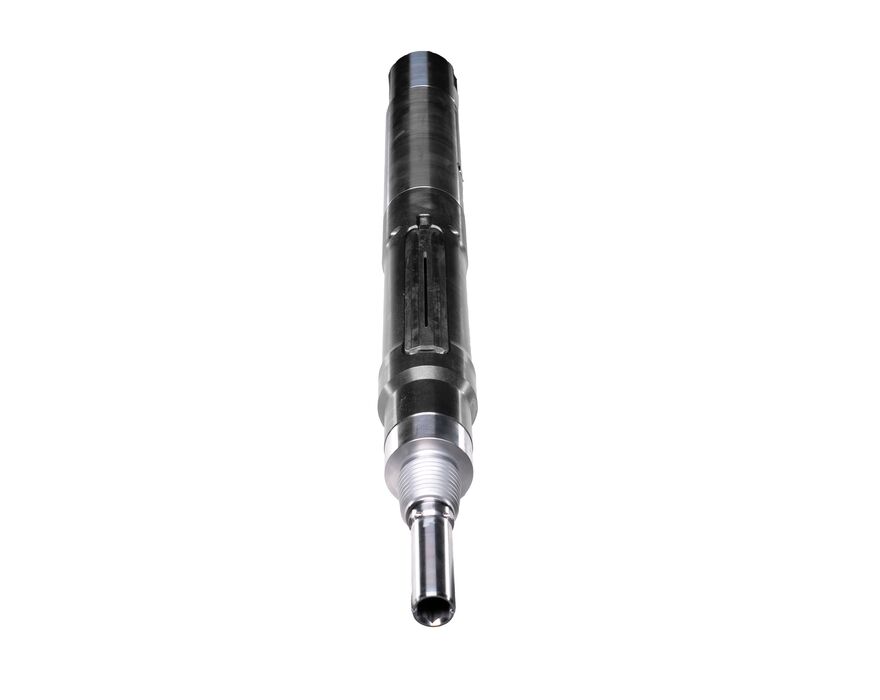
Set a Vermeer RH15 or RH10 rock head next to the RH9 and the profiles look nearly identical. All three are dua-rod rock heads and share the same basic design, the same rebuild process and the same 2-7/8 API regular bit box. A two-degree bend near the front handles steering.
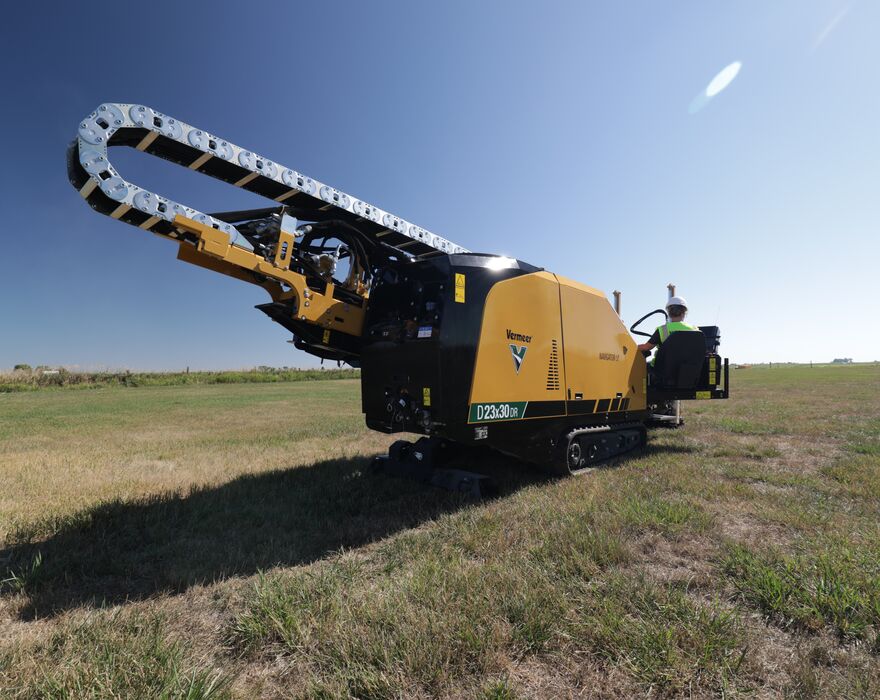
On a Vermeer D23x30DR S3 dual rod drill,the RH9 can cut a pilot bore as small as 4.75 in (12.07 cm). For a crew drilling 5.5-in (14 cm) pilot holes to place one small pipe, that can mean tighter bids, less water to haul and mix, and less time on the bore.
Handling a lighter dual rod rock head
A conventional rock head is a multiple-person job to get on a dual rod drill. The RH9 rock head handles much more like a standard dirt head. That matters on crews without a lifting setup, and more where regulators limit what a crew can lift.
“Its lighter weight and shorter profile give crews better handling in the field with less equipment needed, making it particularly valuable for telecom installations in rock conditions,” Mecham said.
The RH9 weighs 105 lb (47.6 kg). The RH10 built for the same drill weighs 305 lb (138.3 kg).
Sonde cap options for the undersized rock head
The sonde is the next thing to settle, and it is what sets your hole size. It rides inside the head, and a bigger sonde locates deeper but needs a bigger housing around it. Depth and hole size move together. You cannot have both on the same dual rod rock head, so the RH9 comes three ways:
| Sonde | Connection | Minimum pilot bore | Fits |
| 8in (20.32 cm) | Direct connect | 4.75 in (12.07 cm), PDC or tricone | D23x30DR S3 and D40x55DR S3 |
| 15 in (38.1 cm) | Direct connect | 5.25 in (13.34 cm) PDC, 5.5 in (14 cm) tricone | D23x30DR S3 |
| 8 in (20.32 cm) | Starter rod | 4.75 in (12.07 cm), PDC or tricone | D23x30DR S3 and D40x55DR S3 |
On a D23x30DR S3, start with the sonde. Take the 8-in (20.32 cm) sonde when the work is single conduit telecom and you want the smallest hole the RH9 cuts. Take the 15-in (38.1 cm) sonde when you need the locating depth and can live with a slightly bigger bore. It is also what most US crews already run. The starter rod build fits that drill too, though direct connect makes a shorter, handier tool and is the more common pick on a dual rod drill in North America. Working off a D40x55DR S3? The 8-in (20.32 cm) sonde comes both ways there too, direct connect or starter rod, and the same tradeoff applies.
Protecting the transmitter inside a small rock head
The 8-in (20.32 cm) sonde is usually the part crews push back on. Small heads can be hard on transmitters, and a thin wall housing of 2 in to 2.25 in (5.1 cm to 5.7 cm) is often where it shows up.
“When you put a small transmitter in a thin wall housing, it is hard to keep things rigid enough that the electronics never see flex. Putting it in a heavier housing helps keep that flex away from them.”
The RH9 rock head places its transmitter in a housing built for a heavier duty class and larger diameter, which can help limit that flex.
Matching bits to a small-diameter rock head
The sonde is not the only thing setting your hole size. The bit can move it too, and PDC is the bit for this head either way. On the 8-in (20.32 cm) build both bit types (PDC or tricone) cut the same 4.75-in (12.07 cm) minimum, so there PDC is about wear life. On the 15-in (38.1 cm) build it is also about the hole: a PDC bit drills 5.25 in (13.34 cm) against 5.5 in (14 cm) for a tricone.
“I really like a PDC bit on this head. The bearings in a small roller cone are tiny, and behind the thrust of a dual rod drill they tend to wear quickly. A tricone will run, just know you may consume more bits than you are used to.”
For more on matching bits to ground, see finding the right drill bit for your ground conditions. The Vermeer HDD tooling lineup covers the rest of the string.
Matching the rock head to your dual rod drill
The RH9 and the RH10 both run on the D23x30DR S3 and the D40x55DR S3, and which one counts as undersized depends on the dual rod drill under it. On a D23x30DR S3 the RH10 is the standard rock head and the RH9 is the small option. On a D40x55DR S3 the RH15 is standard, so both come in under it.
Either way the RH10 cuts a 5.5-in (14 cm) pilot. Step up when the RH9 goes smaller than your work calls for. Both sit in the same Vermeer rock tooling family.
Who an undersized rock head is right for
The RH9 is a specialty tool in the dual-rod lineup and it works best matched to the job. “This specialty tool functions like a scalpel for precise rock drilling projects that don’t require larger diameter holes,” Mecham said. Small pilot bores, the right ground and sensible rebuild intervals are where it fits, and matched that way it can open up jobs a standard rock head prices out. Everyday production in harder ground is what the standard head is for: the RH10 on a D23x30DR S3, the RH15 on a D40x55DR S3.
Like the rest of the RH family, the RH9 is field rebuildable, which can help keep lifetime tooling cost down. Inspecting HDD tooling: what can be serviced and what should be replaced walks through where those intervals land, and an HDD tooling specialist at your dealership can help set them.
Talk with your local Vermeer dealer about whether the RH9 or the RH10 fits the rock work your dual rod drill sees.
Vermeer Corporation reserves the right to make changes in engineering, design and specifications; add improvements; or discontinue manufacturing at any time without notice or obligation. Equipment shown is for illustrative purposes only and may display optional accessories or components specific to their global region. Please contact your local Vermeer dealer for more information on machine specifications. Vermeer, the Vermeer logo and Equipped to Do More are trademarks of Vermeer Manufacturing Company in the U.S. and/or other countries. © 2026 Vermeer Corporation. All Rights Reserved.