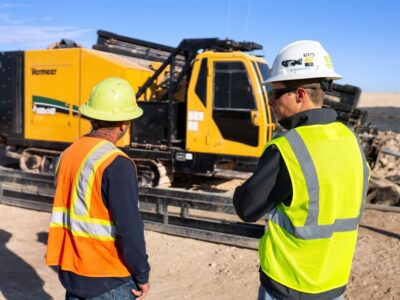
Your new horizontal directional drill (HDD) maxi rig has been delivered. It’s a major investment and a critical tool for taking on larger, more complex pipeline projects.
But a new drill sitting in the yard doesn’t generate revenue. Getting it on the ground, running efficiently and tackling tough jobs is what matters.
The phase between delivery and the first bore is critical, and the support you receive during this time can set the tone for the entire life of the machine.
So, how do you get started with a new Vermeer maxi drill? The process is a comprehensive, hands-on partnership designed to get your crew productive from day one, adapting to your crew’s experience, the job’s complexity and your operation’s long-term needs.
Let’s walk you through the start-up process for your HDD maxi rig.
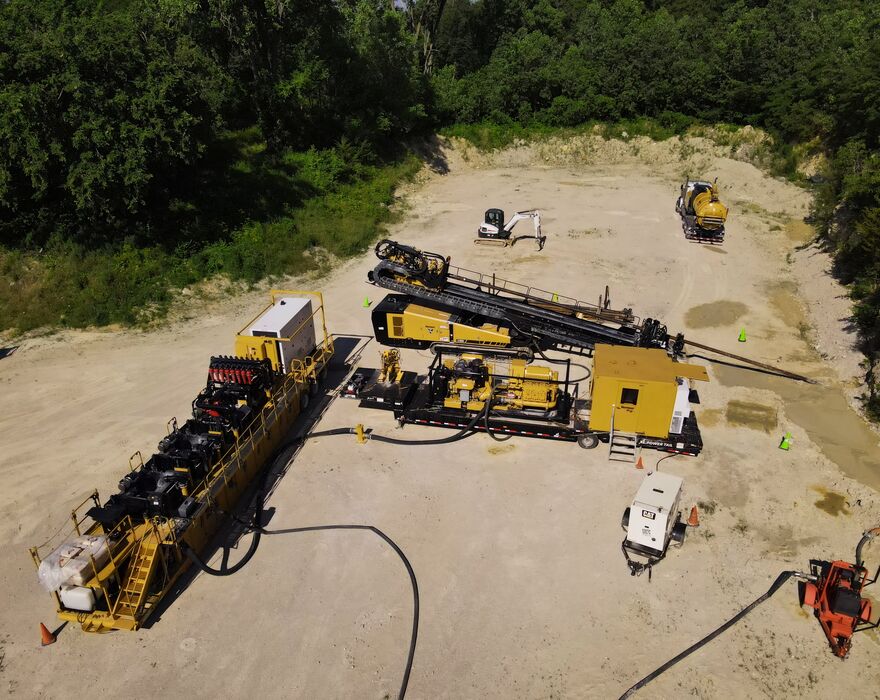
Getting started with your new maxi rig drill
Ideally, the support process begins before the maxi rig even touches the dirt of a live project. According to Vermeer Product Specialist, Kelly Beller, this often takes the form of a pre-delivery inspection (PDI).
“If a rig shows up at the dealer’s yard or a laydown yard, we’ll do a quick walk-around with the customer, operator, mechanics, whoever’s there,” he explained. “Basically, it’s a pre-delivery inspection somewhere where you’re not pressured to get something done.”
This pressure-free environment allows the crew to get familiar with the machine without the immediate stress of a project deadline.
Of course, projects don’t always allow for that luxury. “Sometimes it’s not the case,” Beller added. “If we get on a jobsite with a rig, then it depends on where they bring me in as to what they need me to assist or advise them to do.”
This on-site support starts with the fundamentals:
- Advising on proper placement, whether on crane mats or firm ground.
- Setting the front anchor.
- Correctly hooking up all the mud/water lines to the pump.
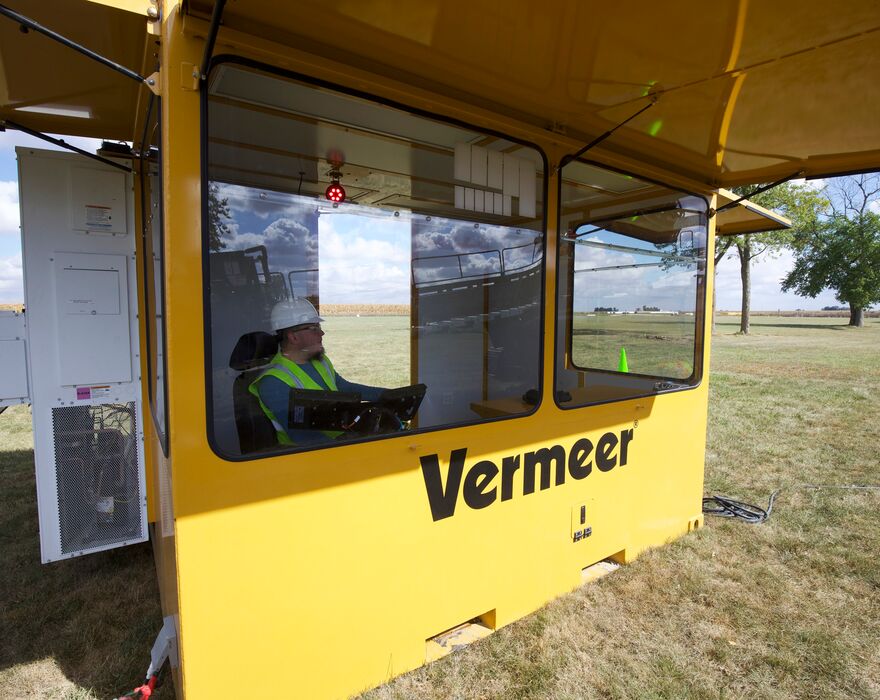
Tailored HDD maxi rig training for your crew’s experience level
Not every crew has the same needs, and the startup support reflects that. This tailored approach to HDD maxi rig training gives every crew the specific guidance they need.
- For experienced crews just adding another maxi rig to their fleet, the process is streamlined. “If it’s a crew that’s already had a maxi rig and they’re just buying a new one, usually it’s a week of onsite support,” said Beller. The goal is to get them comfortable with the specifics of the new machine and address any differences from their previous models.
- For contractors new to maxi rigs, the approach is entirely different. “For a crew that’s investing in their first large horizontal directional drill, we might be on-site for 10 to 12 days to get everybody familiar with the machine and the process,” Beller explained. “When dealing with a novice crew, they might not know what goes where or how to do it. We provide comprehensive guidance and detailed instructions to help them develop the necessary skills.”
Navigating HDD complexity on pipeline projects
While the core drilling principles are similar across rig sizes, the complexity of the downhole tooling assembly can escalate significantly for certain applications. A standard dirt bore has a relatively straightforward tooling setup.
“Things get really complicated on a mud motor job with wireline,” Beller explained. “That’s where expert guidance becomes invaluable. The setup of your downhole tooling is much more involved. You have to walk the crew through how to properly sequence and connect every component because there’s just a lot more out front of that first drill rod.”
The precision required for wireline jobs is critical. A wire must be pushed through and spliced at every single joint of drill pipe, and a single mistake can have massive consequences.
“One bad splice will ruin the wire,” Beller warned. “The next thing you know, you’re out 2,000 ft or 3,000 ft (609.6 or 914.4 m) and you get a short. Well, the only way to find your short is to start tripping it all back, and you hate to find it at joint 100.”
The training provided during startup covers these critical details, like how to apply shrink tube without scorching it or leaving air bubbles, to prevent costly downtime.
HDD maxi rig support
The Vermeer support model is built on a partnership between the factory specialist and the local dealer network. Beller explained the dynamic of this partnership: “My role is to be on-site for a week or two to get the crew up and running, but the local dealer is who they’ll work with day-to-day. That makes it critical to get the dealer’s team, their mechanics and drill specialists, involved from the start. If they’re not familiar with the rig, they need to be brought up to speed because they are the ones who will support that machine long-term.”
This structure is a key differentiator, providing contractors local expertise to rely on for ongoing maintenance and support. This relationship doesn’t end after the first job. It’s common for contractors to call with operational questions months after the initial startup.
“A superintendent might call with a question about running a mud motor, thinking their fluid cleaner (reclaimer) has a high enough flow rate for the job,” Beller explained. “I’ll have to explain the crucial difference between flow and pressure. The cleaner might provide the right volume of fluid, but it doesn’t have the high pressure needed to actually run the motor. That requires a high-pressure pump in the system.”
A quick phone call provides the necessary information can save a contractor from a costly mistake. As Beller put it, the specialist is a resource for “the life of that machine.”
Building maxi rig operator self-sufficiency beyond basic operating
While hands-on training is invaluable, a core part of the startup process is teaching crews how to solve problems on their own. This includes proactive planning and knowing where to find answers.
Empowering maxi rig crews with the operator’s manual
The operator’s manual is a crucial resource. While a physical copy comes with every machine, digital versions can also be accessed through the VermeerOne™ platform. During training, if an operator asks a question, Beller will often pull out the manual and find the answer with them. “Just because I’m not here, the manual still is,” he said. “A crew just has to dig for it and find it, but the answer is in there.” This approach empowers the crew and “makes them rely on their own resources that they have,” fostering the self-sufficiency needed for long-term success.
Proactive planning for future conditions
The guidance also extends to planning for what’s next. Beller makes a point to discuss future environmental conditions based on where a crew is working. “Crews have to think ahead. If a job starts in the summer but it’s going to run into the fall, a plan is needed for cold weather. We’ll talk about what needs to be done to the rig at night to prepare it, so it doesn’t freeze up and bust the water pumps.”
It’s not just about the first job; it’s about having a reliable machine for all the jobs to come. The Vermeer startup process is more than just a delivery. It’s a hands-on partnership that prepares your crew for the specific challenges of your project. With tailored training and a support network of factory specialists and local dealer experts, contractors are equipped for success long after the first bore.
Ready to learn more about the support that comes with every Vermeer maxi rig? Contact your local Vermeer dealer or visit vermeer.com.
Vermeer Corporation reserves the right to make changes in engineering, design and specifications; add improvements; or discontinue manufacturing at any time without notice or obligation. Please contact your local Vermeer dealer for more information on machine specifications.
Vermeer, the Vermeer logo VermeerOne and Equipped to Do More are trademarks of Vermeer Manufacturing Company in the U.S. and/or other countries. © 2025 Vermeer Corporation. All Rights Reserved.