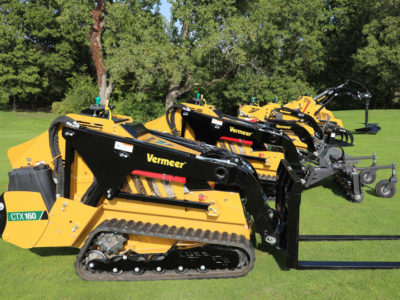
Looking to maximize productivity by investing in a mini skid steer? There are a few things to consider before purchasing, like how often you’ll use it above or below grade, the attachments you will need and your desired engine horsepower. This will help you determine the machine that will be helpful on your jobsite.
Vermeer offers two types of loader arms: radial and vertical lift. Radial lift machines include the S925TX and S450TX mini skid steers. Vertical lift machines include the CTX50, CTX100 and CTX160 mini skid steers. Both loader arm types can use approved mini skid steer attachments for a variety of jobsites, but they do offer subtle structural differences that could help you determine which model is best for you.
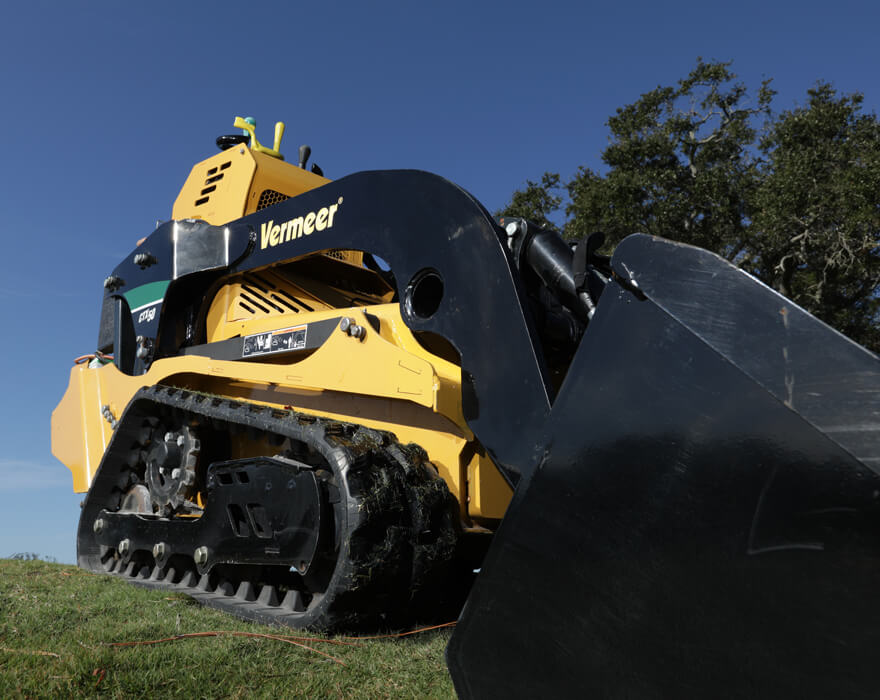
Vertical arms
“The vertical arm lift is a straight line up and down throughout the range of motion,” said Kyle Newendorp, Vermeer product specialist.
With higher hinge pin heights, this makes the vertical line great for use above grade. Attachments that are commonly utilized above grade include grapples, buckets and pallet forks.
“It allows you get up a little higher to gain some more access,” said Brandon Nelson, Vermeer product specialist, “whether that be gaining access to higher shelves if you’re using forks or dumping into dumpsters or dump trucks.”
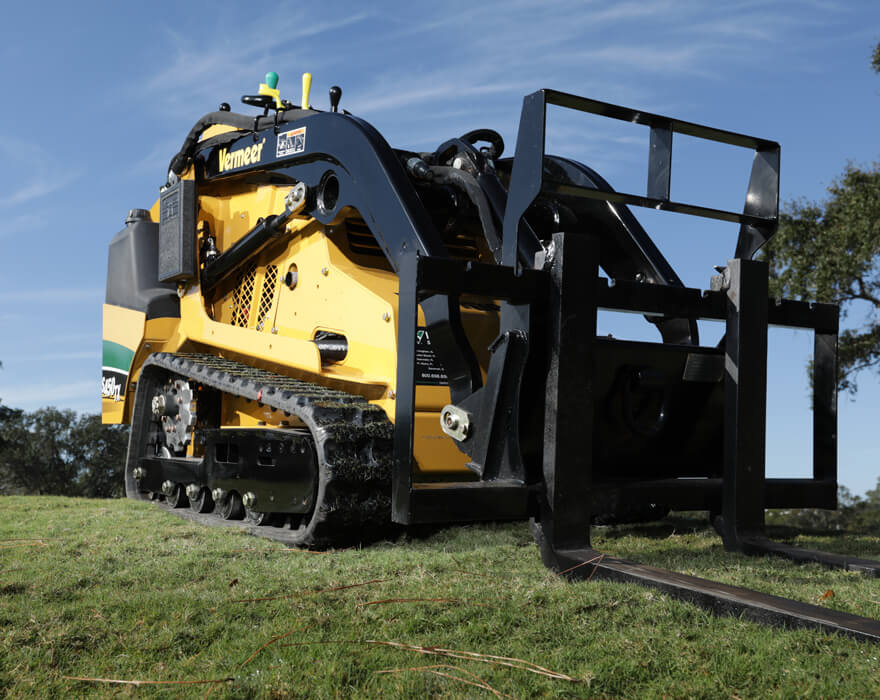
Radial arms
“With a radial arm, it goes out and then comes back in toward the operator when it’s fully extended,” said Newendorp.
This half-circle path in its range of motion makes the radial lift a great option for below grade use. Attachments that are often used for below grade work include augers, buckets, trenchers and vibratory plows.
How to decide?
When it comes to choosing between vertical and radial arms for your mini skid steer, there isn’t a wrong option. Just consider the benefits of each type and how they impact your preferences.
“Really it comes down to what you’re wanting for lift capacity, engine horsepower and price point,” said Nelson.
Talk through those preference points with your local Vermeer dealer and they’ll point you in the right direction of the mini skid steer that will help maximize productivity on your jobsite.
Vermeer Corporation reserves the right to make changes in product engineering, design and specifications; add improvements; or discontinue manufacturing or distribution at any time without notice or obligation. Equipment shown is for illustrative purposes only and may display optional accessories or components specific to their global region. Mini skid steer attachments available from Vermeer dealers may be manufactured by Vermeer Corporation or other attachment manufacturers. Please contact your local Vermeer dealer for more information on machine specifications and attachments.
Vermeer and the Vermeer logo are trademarks of Vermeer Manufacturing Company in the U.S. and/or other countries. © 2022 Vermeer Corporation. All Rights Reserved.